

This is a honest unsponsored review. Like other posts on Take Risks Be Happy, it may contain affiliate links that do not affect our editorial judgment.
Tokyo hotels have gotten expensive.
When I visited in 2026, places like the AC Hotel Tokyo Ginza and Courtyard Tokyo Ginza were running around $400–600 a night on many dates. (That’s a big change from 2022 when I paid around $200-$300 USD for those same hotels). In 2026, even the Moxy Tokyo Kinshicho was more like $140–220.
And then there was the Four Points Flex. I saw rates around $70–130 a night.
There is a reason it is cheaper. The rooms are tiny, there is almost nowhere to hang out, Marriott elite benefits are limited, and the Four Points Flex brand only gives you half an Elite Night Credit for every night you stay.
The Flexi is great in its own way, though. The Four Points Flex is sterile and boring, but clean and nice. This cannot be emphasized enough. In the old days, you’d go to cheap hotels and wonder if they were clean or safe. We are lucky that places like the Four Points Flex exist, where things feel clean and nice.
There is absolutely nothing luxurious about it. But you’re not buying luxury. You’re buying convenience and cleanliness at an affordable price.
We also did a full Moxy Kinshicho vs. Four Points Flex comparison here if you’re deciding specifically between Marriott’s two cheaper options in Tokyo.

Four Points Flex Higashi Kanda location
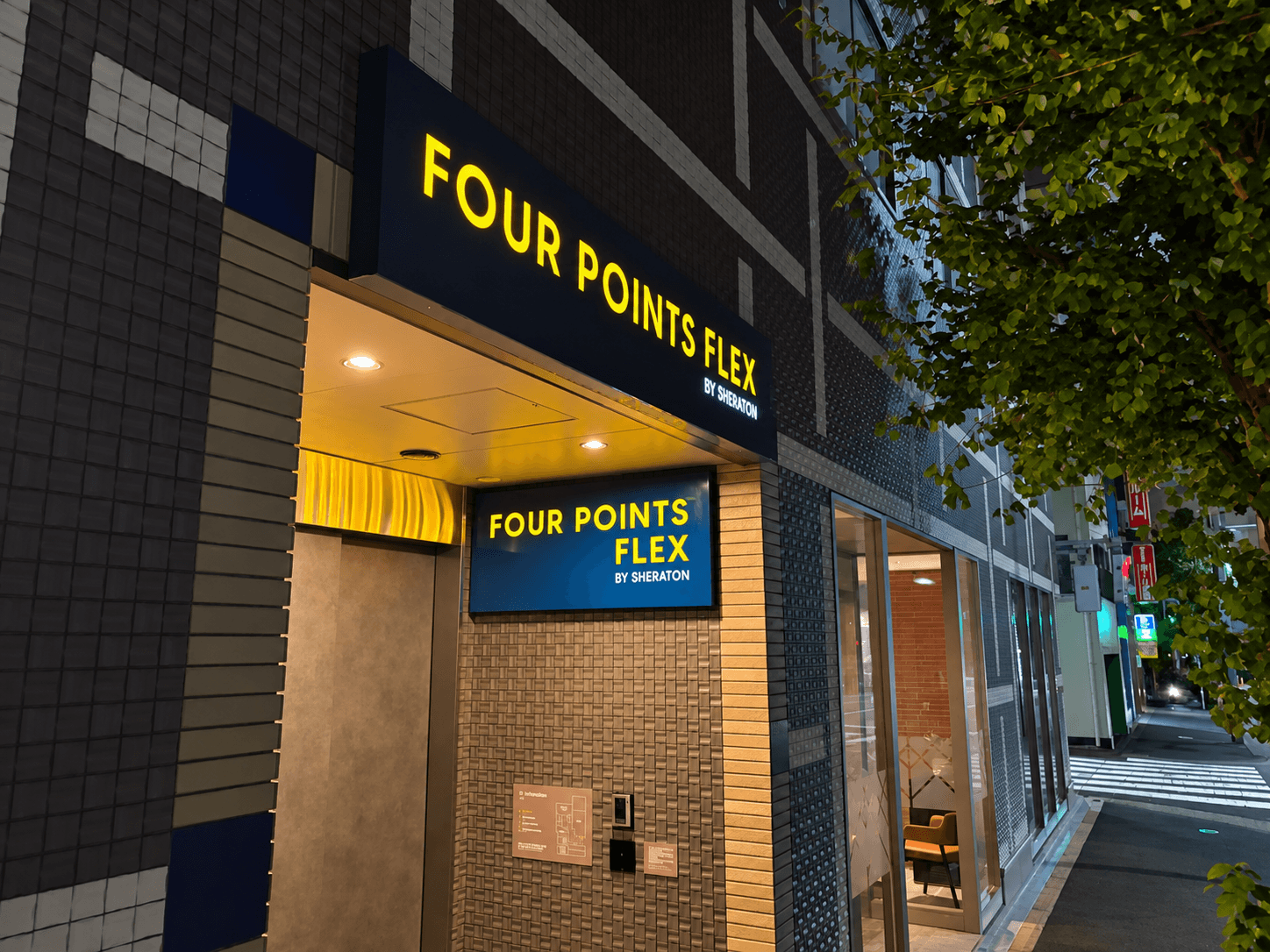
I stayed at the Four Points Flex in Higashi Kanda. Higashi Kanda was a sort of nondescript neighborhood kind of near Akihabara, with a great direct train link to Haneda. It has the advantage of good transportation connections, making it a great first or last night stay in Tokyo if you are arriving late or leaving very early.
That is actually how I used it. On my most recent Tokyo trip, I stayed one cheap night at the Four Points Flex after arriving late, moved to the Moxy Kinshicho for most of the trip, and ended with two nights at the Sheraton Grande Tokyo Bay. That was probably close to the perfect use of this hotel.
There are currently three Four Points Flex hotels in Tokyo proper: Ueno, Higashi Kanda and Shibuya West. Ueno is probably the best location for a normal tourist. Ueno itself is somewhere you might actually choose to stay, with Ueno Park, museums, Ameyoko and an extremely useful train station nearby.
Booking tip: U.S. Rakuten users can earn cash back when booking Marriott hotels through Rakuten. The rate changes, so check the current offer before booking. Right now, Marriott.com is offering 3% cash back through Rakuten.
New Rakuten users can also sign up through my referral link and currently receive a $50 bonus after making $50 in qualifying purchases. Read my full Rakuten review here.
Rakuten rates and signup offers change. If you sign up through my referral link and make a qualifying purchase, I may also receive a referral bonus.
Shibuya West sounds like it is in Shibuya, but it is actually near Ikejiri-Ohashi Station, one stop away. Higashi Kanda is arguably the most practical of the three. It isn’t really somewhere you wake up and think, “Wow, I’m in the best part of Tokyo,” but it is close enough to Akihabara, has good transportation connections, and works extremely well as a base if your plan is mostly to leave the hotel and explore.
No matter how big your budget is, it is nice to wake up where you want to be, or at least close. The Four Points Flex gives you several reasonably affordable locations across Tokyo, and you can choose whichever one puts you closest to what you actually want to do. If I were doing a budget Tokyo trip, I’d switch between multiple Four Points Flex hotels.

The room is tiny
The room is genuinely tiny. My standard room at Higashi Kanda was around 10–11 square meters.
For comparison, a standard room at the Moxy Tokyo Kinshicho is around 17 square meters. That doesn’t sound enormous on paper, but the Moxy gives you roughly 60–70% more space. In Tokyo, you notice it.
The Flex is nevertheless surprisingly functional. There is a small refrigerator, kettle and actual worktable, so while the room is extremely small, it isn’t badly designed.
I wouldn’t want to invite three friends over and have a dinner party in it. But for one person who needs to shower, answer some emails and go to sleep, it works.

I got into my Four Points Flex room quite late, and heard a couple next door talking past midnight. That suggests the walls are thin, so I’d probably bring earplugs if you’re a light sleeper.

The hotel itself
There is a weirdly pleasant practicality to the Flex. It doesn’t try to convince you that the lobby is a lifestyle destination.

The hotel had free coffee and ice in the lobby area, as well as a large selection of free self-serve amenities like toothbrushes and soap. There was also a bread bar from 9 AM, which kind of doesn’t make sense as that’s late for breakfast—but anyway.
The Flex also had a self-service area with cheap sodas and very affordable alcohol, which was kind of surprising.

And I want to note that the hotel gave me a birthday card, as I was there on my birthday, which was a nice touch. So despite the hotel being extremely basic, it didn’t feel unfriendly.
It gives you coffee, toiletries, cheap drinks and somewhere clean to sleep—and that’s about it. Honestly, sometimes that is exactly what you need.

The Marriott points problem
For travelers playing the points game, the major issue with the Four Points Flex series of hotels is that they earn only half an Elite Night Credit. So if you stay there for 10 nights, you are only credited for five.
Apparently you used to have to stay two nights to get a single night, or you got nothing, but this has now been upgraded to allowing you to get .5 nights for staying a single night. I know this because there was literally a poster on the wall of the elevator explaining the change.

Anyway, this was a major negative for me because I was chasing Titanium Elite when I stayed there.
Four Points Flex also earns only five Marriott Bonvoy points per dollar, rather than the 10 points per dollar you get at many Marriott brands. So this is a weird situation where the cheapest Marriott can be less attractive if you are specifically staying in hotels to earn Marriott status.

If you don’t care about elite status, then obviously you don’t care. Take the cheaper room.

Four Points Flex vs Moxy Kinshicho
The Moxy is the most obvious competitor.
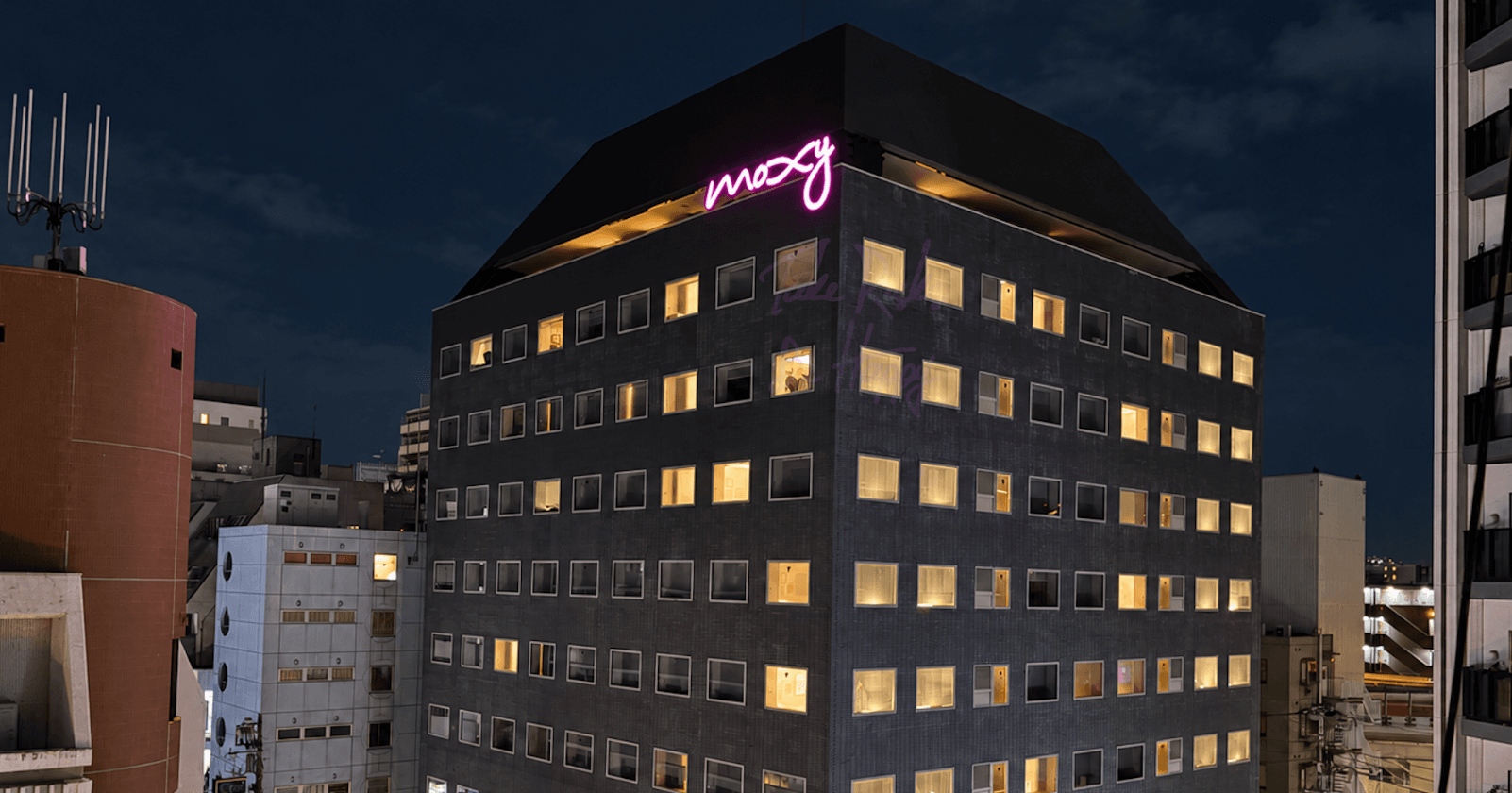
The Four Points Flex chain is boring but functional and nice in its own way. The Moxy, however, is anything but boring. The Moxy gives you a substantially bigger room, a real breakfast buffet, laundry facilities, a surprisingly good gym, and a huge lounge-ish area where you can actually work or hang out.
The Flex gives you coffee, toiletries, cheap drinks and somewhere clean to sleep—and that’s about it.
If they were exactly the same price, I would choose the Moxy almost every time. But they aren’t always remotely the same price. When I visited, I saw Flex rates around $70–130 while the Moxy was more like $140–220, sometimes considerably more.
If the Flex is $90 and the Moxy is $190, you have to ask yourself what you are actually buying with the extra $100. If you’re leaving the hotel at 8 AM and coming back at midnight, paying much more for a cool lobby you never use is pointless.
The Moxy is a hotel you can enjoy. The Four Points Flex is a hotel you can use.
We have a full standalone review of the Moxy Tokyo Kinshicho here, as well as the more direct Moxy-vs-Flex comparison above.

What about the Sheraton Grande Tokyo Bay?
The other surprisingly affordable Marriott during my trip was the Sheraton Grande Tokyo Bay.
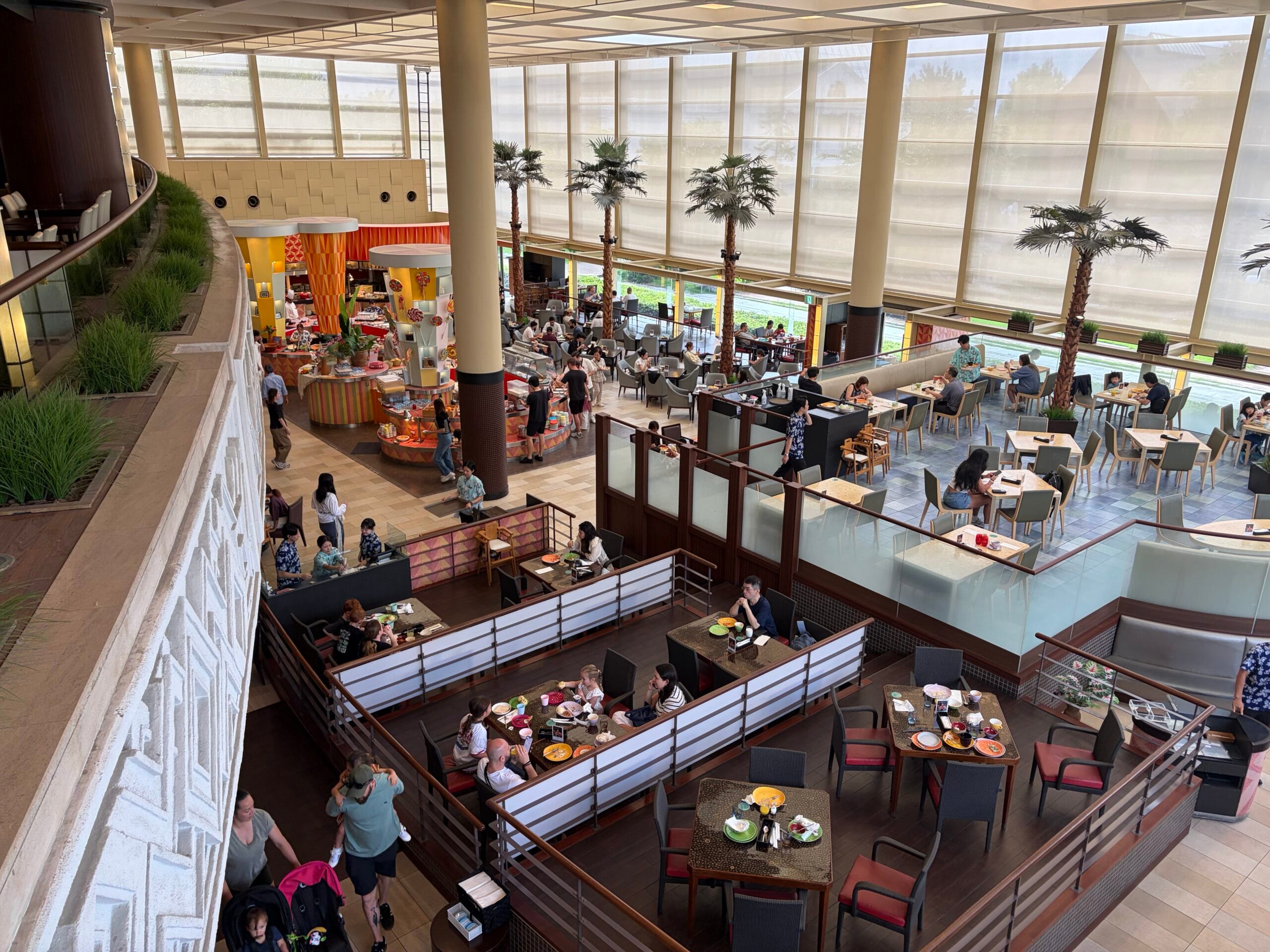
On paper, the Sheraton absolutely destroys the Four Points Flex. The rooms start around 36 square meters rather than 10 or 11. There are restaurants, pools, a large gym, a Japanese bath, and a Marriott lounge. If you’re Platinum Elite you get a huge breakfast and lounge access.
And when I visited, I paid around $150 a night.

So why would anyone choose the Flex? Location.
The Sheraton is all the way out at Tokyo Disney Resort in Maihama. If you are going to Disneyland, have kids, want a huge room, or want to come back to your hotel and actually enjoy being there, I would 100% choose the Sheraton.
If you are arriving late, leaving early, exploring Tokyo all day and literally just want somewhere clean to sleep, I would choose the Flex and save the money.
We did a full review of the Sheraton Grande Tokyo Bay here, including the rooms, Marriott elite benefits, Disney tickets and whether it is actually too far away to use as a base for Tokyo.

What about the (more) expensive Tokyo Marriotts?
I’ve also stayed at the AC Hotel Tokyo Ginza and Courtyard Tokyo Ginza.
Those hotels have one huge advantage: location. You are in Ginza. They are also nicer hotels than the Four Points Flex. Obviously.
But when I visited most recently, they were often roughly $400–600 a night. At that point we are not really discussing the same product.
A $90 Four Points Flex room does not need to be as good as a $500 AC Hotel room. It needs to be clean, safe and convenient enough that you don’t regret booking it.
And it is.
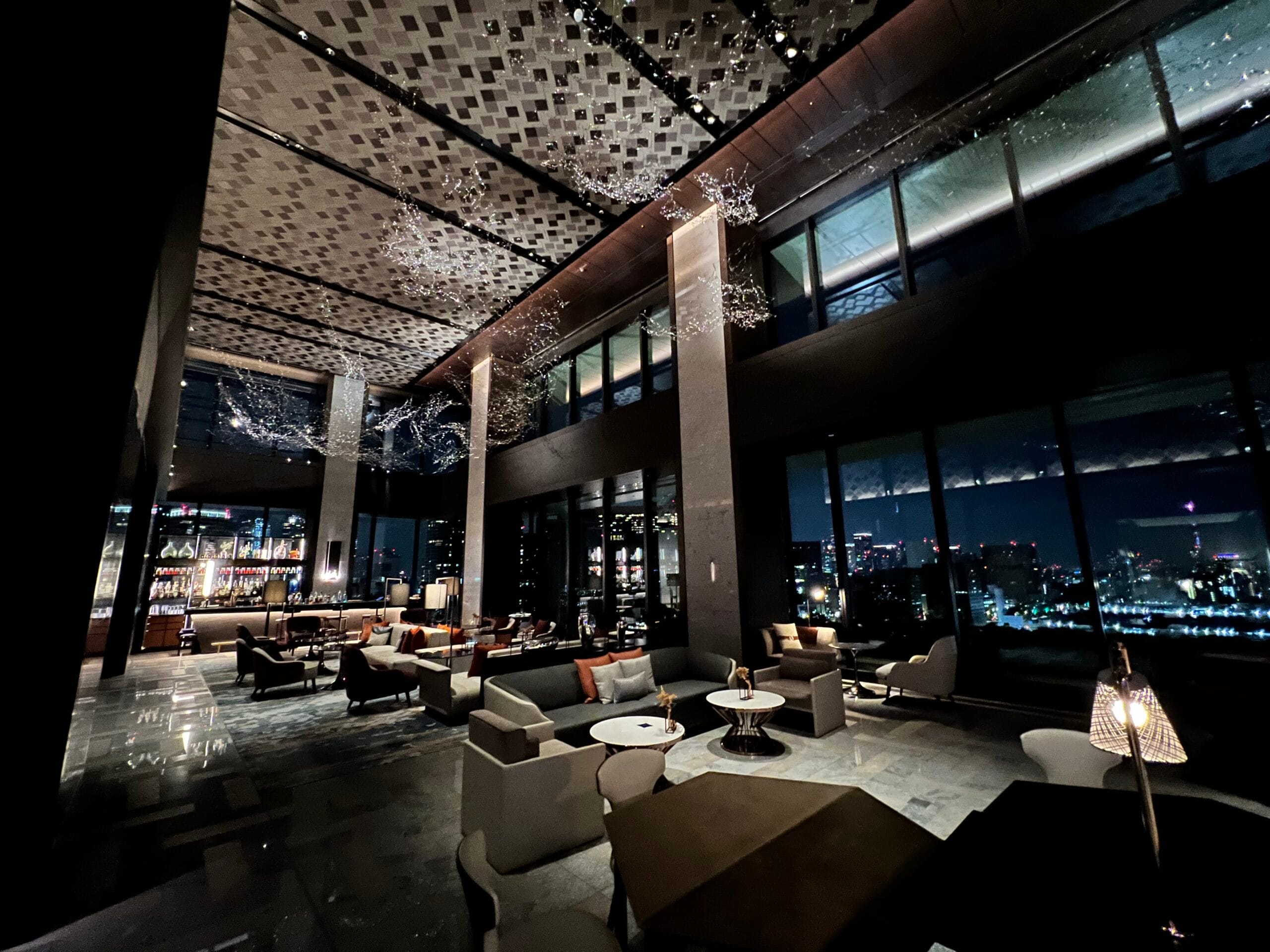
There is also the MESM Tokyo, Autograph Collection, which is in an entirely different price bracket again. The MESM is genuinely luxurious—I had a piano in my room—and is much closer to being the kind of hotel where the hotel itself is part of the trip.
Check out our brief video review of the MESM here.
The MESM, AC Hotel and Courtyard aren’t really competitors to the Four Points Flex in the normal sense. They show how strange Tokyo Marriott pricing has become. You can spend five or six times the price of the Flex without getting five or six times as much enjoyment out of your trip.
Is Four Points Flex Tokyo Higashi Kanda worth it?
Yes, as long as you understand what it is.
This is not somewhere I would book for a honeymoon. It is not somewhere I would book because I wanted to spend an afternoon relaxing at the hotel. It is not somewhere I would choose if the Moxy cost $20 more.
But if the Four Points Flex is $80, $90 or $100 and the alternatives are $150, $200 or much more, it starts making a ton of sense.
If you don’t care where you sleep and just want something clean, go with the Four Points Flex. If you want something bigger than the tiny Flex rooms, but don’t want to trek all the way out to Maihama, the Moxy Kinshicho is a great choice. If you are going to Disneyland, have kids, or want a huge room and an actual resort, go with the Sheraton Grande Tokyo Bay.
If price is no object, go MESM, Ritz-Carlton or Edition, for sure.
And if you want to pay $400–600 to wake up in Ginza, the AC Hotel and Courtyard are there too.
The Four Points Flex doesn’t really compete by being better than any of those hotels. It competes by being dramatically cheaper.
For me, that is really the appeal. It is boring in an extremely reassuring way.
You leave your tiny, clean room in the morning, go experience Tokyo, come back at night, and go to sleep.
Sometimes a hotel doesn’t need to do anything more than that.
More Tokyo Hotel Reviews
Planning a trip to Tokyo? Check out our other hotel reviews:
- Moxy Tokyo Kinshicho Review: One of Tokyo’s Best Affordable Marriotts
- Four Points Flex Tokyo Higashi Kanda Review: Cheap, Clean and Tiny
- Sheraton Grande Tokyo Bay Review: Great for Disney, Good for Tokyo
- MESM Tokyo, Autograph Collection Review
- Moxy Kinshicho vs. Four Points Flex: Tokyo Budget Marriott Comparison
- Watch our short look at the MESM Tokyo on YouTube
Leave a Reply