



Marriott Bonvoy Brilliant vs. Chase Ritz-Carlton Credit Card: Which Is Better?
At the high end of Marriott co-branded credit cards, there are really only two competitors: the Chase Ritz-Carlton Credit Card and the American Express Marriott Bonvoy Brilliant.
I’ve had both cards for years, through fee and benefit changes, as well as many Marriott stays. And while they might look similar on paper, they are actually quite different products.
The Ritz-Carlton card costs $450 a year and gives you an 85,000-point annual free-night certificate, excellent airport lounge access, and some unusually good travel benefits. The Bonvoy Brilliant costs $650, but gives you automatic Platinum Elite status, 25 Elite Night Credits, and the same 85,000-point certificate.
So which one is better? And are either of them actually worth paying hundreds of dollars a year for?
In this review, I’ll compare the two cards, explain which one I would choose, and whether you should consider getting both. I’ve also written separate, more detailed reviews of the Chase Ritz-Carlton credit card and the American Express Bonvoy Brilliant.
This review is unsponsored and reflects my own actual experience with these cards and Marriott. While I do have a PhD in Finance, this article, like all of our content, is not financial advice!
Like other Take Risks Be Happy posts, this post may include affiliate links that do not affect our editorial judgement. As an Amazon Associate I earn from qualifying purchases. Updated October 2026.
Let’s dive in!

The short version: Ritz-Carlton vs. Bonvoy Brilliant
For most frequent Marriott travelers, I think the Bonvoy Brilliant is the better single card, largely because Platinum Elite status is substantially more valuable than Gold.
However, if you’re already a Lifetime Platinum Elite, or travel so much you get the status regardless of the card you hold, I would actually slightly prefer the Ritz-Carlton card.
Here are the major differences:
| Benefit | Chase Ritz-Carlton | Amex Bonvoy Brilliant |
|---|---|---|
| Annual fee | $450 | $650 |
| Annual credits | Up to $300 airline incidentals | Up to $300 dining ($25/month) |
| Effective annual fee after credits | $150 | $350 |
| Annual free-night certificate | 85,000 points | 85,000 points |
| Marriott status | Gold Elite | Platinum Elite |
| Annual Elite Night Credits | 15 | 25 |
| Marriott spending | 6x points | 6x points |
| Airport lounges | Priority Pass + Chase Sapphire Lounges | Priority Pass |
| Free authorized users with lounge access | Yes | No equivalent benefit |
| Ritz-Carlton Club upgrades | 3 certificates | None |
| Welcome bonus | None (product change only) | Potentially substantial |
| Travel insurance | Particularly strong Visa Infinite benefits | Travel protections included |
Both cards have a lot going for them. However, the Brilliant is arguably the better Marriott hotel card, while the Ritz-Carlton is arguably the better premium travel card.
How much do the cards actually cost?
The Ritz-Carlton Card currently has a $450 annual fee, but gives you up to $300 every calendar year toward certain airline incidental purchases. That includes things such as baggage fees, seat upgrades, inflight meals, internet and entertainment, airline lounge day passes, and eligible airline lounge memberships.
Importantly, this isn’t the same ultra-simple automatic travel credit you get with some other premium credit cards. You generally make the qualifying purchase first and then contact Chase to have the credit applied.
For most travelers, the real cost of the card is effectively $150 for an 85k certificate, since it’s not that hard to get $300 in airline incidentals reimbursed. And $150 for an 85,000-point certificate is a great deal, since you can get $500-$800 of value from such a certificate by staying somewhere like the Ritz-Carlton Bali or St. Regis Bali, especially if you add a few thousand more points on top.
What about the Bonvoy Brilliant?
The Brilliant has a $650 annual fee, but also gives you $300 in annual restaurant credits, split into twelve monthly $25 credits. The effective fee is really about $350 a year if you fully use the restaurant credits.
An 85,000-point certificate can easily be worth more than $350 with a good redemption. So you can potentially break even on the annual fee with the restaurant credits and certificate alone, before factoring in Platinum benefits. Of course, this only works if you actually use those benefits.
The Ritz’s $300 credit is arguably more convenient for frequent travelers with qualifying airline expenses, since you aren’t forced to remember a $25 credit every month.
So the Ritz is effectively $150 and the Brilliant $350, assuming you fully use their respective credits. Obviously you may wonder why the Brilliant is $200 more.
I can’t say why AMEX prices it the way it does, but I think it’s $200 more for two key reasons, with the first mattering the most: the Brilliant gives you Platinum Elite status, which gets you free breakfasts or lounge access at places like the Sheraton Grand Hyde Park, 4PM checkouts, and higher upgrade priority. It also gives you 25 Elite Night Credits, instead of the Ritz-Carlton’s 15.
The Brilliant occasionally has large sign-up bonuses, too, which can make the first year particularly attractive.

Marriott Gold vs. Platinum Elite: The Brilliant’s biggest advantage
The Bonvoy Brilliant gives you automatic Platinum Elite status, while the Ritz-Carlton gives you Gold. And that difference is huge.
I got the Brilliant back when the benefits were totally different. It used to guarantee Gold Elite status and offered an annual statement credit for stays at Marriott hotels. Today, it grants Platinum Elite status, and the old Marriott credit has been replaced with restaurant credits. The old benefits were simpler, but worse, since Platinum Elite status is substantially more valuable than Gold.
My experience with Marriott Platinum Elite
Platinum Elite status is a huge benefit at international hotels, especially in Asia.
The biggest upgrades I’ve gotten are to the Grand Staircase Suite at the St. Pancras in London and to a pool villa at the St. Regis in Bali. I think it’s highly unlikely either would have happened without Platinum Elite, as I’m not a big spender or famous guest. (Those happened before I was writing hotel reviews on this blog, so it wasn’t Marriott noticing the reviews.)
The everyday benefits can also be surprisingly valuable. Complimentary breakfast for two, club lounge access, and 4 p.m. checkout can make a real difference over a multi-night stay.
For a practical example, see my Sheraton Grand Sydney Hyde Park review. It’s exactly the sort of hotel where Platinum benefits can make a nice stay substantially better. Another good example is the Sheraton Grande Tokyo Bay, where I got complimentary breakfast, lounge access, and more on a stay costing around $150 a night. The Sheraton Stockholm also has a lounge–which is just okay–but free breakfast as a welcome choice, and their breakfast is awesome.
The 50% bonus Marriott points, 4 p.m. late checkout, increased upgrade opportunities, and complimentary breakfast or lounge access at participating hotel brands are Platinum Elite benefits. The Brilliant gives you that status automatically, but those benefits aren’t exclusive to cardholders.
If you’re already a Lifetime Platinum Elite, or travel so much you get the status regardless of the card you hold, I would actually slightly prefer the Ritz-Carlton card. But, if you don’t have Platinum, go Brilliant–Platinum is that valuable.
Is Gold Elite status useful?
The Ritz-Carlton card gives you Marriott Bonvoy Gold Elite status. Gold is not a great status, but it’s a whole lot better than nothing, as it includes a late checkout up to 2PM (based on availability) and a chance of an upgrade. Gold also earns you an extra 25% points on stays at Marriotts.
I’ve seen upgrades happen on Gold Elite status, but it’s not that valuable anymore, especially within the United States.
One exception is for people who stay almost exclusively at Ritz-Carltons. Platinum Elite matters a bit less at the Ritz-Carlton, as RC doesn’t give Platinum’s free breakfast.
Basically, if you are actually staying at the Ritz-Carlton, specifically, the Ritz card becomes much more attractive, and well, we shouldn’t be that surprised about that.

Where should you actually use these cards?
Once you’ve gotten the card, the next question is where to use it. The point isn’t simply to collect credit cards and hotel points, but to actually travel.
I’ve reviewed the Ritz-Carlton Bali, the St. Regis Bali, and basically every Marriott hotel in Sydney. I’ve also stayed at properties like the Santa Monica Proper, where Platinum benefits are much more limited, and plenty of hotels in Tokyo and elsewhere. These reviews are useful for figuring out which hotels are actually worth your money or points, and where your new status will make a meaningful difference.
Elite Night Credits and Lifetime Platinum: Brilliant wins
The Brilliant earns the most annual Elite Night Credits of any Marriott co-branded credit card, at 25 nights. The Ritz-Carlton gives you 15.
You’ll need 10 years of Platinum Elite status and 600 qualifying nights to get Lifetime Platinum. Holding the Brilliant for ten years could therefore contribute 250 of the 600 nights you need, assuming the benefits and program rules remain unchanged.
If you stack the Bonvoy Business Card, also from American Express, you’ll get another 15 Elite Night Credits per year, bringing you to 40 annually.
Over ten years, that could be 400 out of the 600 nights simply from holding the two cards. That’s a very substantial head start. You’d only need 20 actual nights per year to slide into Lifetime Platinum after a decade. And, points redemptions count, so not all of those stays have to be paid.
The Brilliant and Business combination also puts you just 10 nights away from your annual 50-night Choice Benefit, which can include five Nightly Upgrade Awards.
Unfortunately, you can’t stack the Ritz-Carlton’s 15 annual Elite Night Credits with the Bonvoy Brilliant’s 25 annual Elite Night Credits, because Marriott won’t stack consumer card nights. The solution is stacking either the Ritz or the Brilliant with the Bonvoy Business card, since you can stack one consumer card and one business card.
For my personal travel needs, this is one of the biggest arguments in favor of the Brilliant.
Airport lounge access: The Ritz-Carlton is ridiculously good
Both cards offer Priority Pass airport lounge memberships, which is a nice added bonus. However, the Ritz is ridiculously overpowered in terms of airport lounge benefits.
You get access to Chase Sapphire Lounges in addition to a Priority Pass membership. Even better, authorized users can get their own lounge access, and there is no annual fee for authorized-user cards. This benefit used to be overpowered to an extreme level. Before January 15, 2026, Ritz cardholders had effectively unlimited complimentary guests at participating Priority Pass and Chase Sapphire Lounges.
And people apparently tested the meaning of unlimited. There are reports online of cardholders bringing five, six, or even 13 guests into lounges at once. I can understand why Chase killed this. Now, primary cardholders and authorized users get two complimentary guests each. Additional guests are $27.
Which brings us to one of the strangest—and best—features of the card.
Authorized users are free and get lounge access, which is the Ritz-Carlton card’s rare superpower
Authorized users cost nothing extra, but can get their own Priority Pass membership and Chase Sapphire Lounge access, including two guests. That is extremely unusual for rewards credit cards.
I added members of my immediate family largely for this reason. As far as I can determine, they don’t need to regularly spend on their cards to keep the benefit alive, and they can get lounge access for themselves and two guests.
So you could have a pretty large family and, with enough AU, give everyone lounge access. However, AU spending is your responsibility, so make sure you trust your family!
For families who travel, this might genuinely be one of the best features of the Ritz card. The Brilliant’s Priority Pass membership is perfectly nice, but it simply doesn’t compete with the Ritz’s combination of Sapphire Lounges and complimentary authorized users.

Ritz-Carlton Club Level upgrades and other special benefits
With the Ritz-Carlton card you also get three Ritz-Carlton Club Level upgrade certificates each account anniversary year. Each can theoretically cover a paid stay of up to seven nights, meaning as many as 21 upgraded nights per year.
My understanding is that these are somewhat restrictive, and you need to call Ritz to apply the certificate, and you can’t always just get the cheapest room possible and make it a club lounge room. Most importantly, not every Ritz-Carlton even has a club lounge. The Ritz-Carlton Bali does not anymore (it used to before COVID, apparently).
I haven’t tested these certificates yet, but I have spent nearly two weeks at the Portman Ritz-Carlton Shanghai, and its club lounge was great.
If you already stay at Ritz-Carltons, this benefit could be huge, especially if you are a heavy drinker, since these lounges have free-flowing alcohol at night.
The Brilliant doesn’t offer these Club Level upgrade certificates, so this is a clear Ritz-Carlton advantage.
The $100 Ritz-Carlton and St. Regis credit
On certain paid stays of at least two nights at participating Ritz-Carlton and St. Regis hotels, you can also get a $100 property credit toward eligible dining, spa, and recreational spending. You need to book an eligible rate and pay with the Ritz card. I haven’t tested this one yet either.
The Brilliant also has a qualifying property credit at participating Ritz-Carlton and St. Regis hotels, so this isn’t an exclusive Ritz benefit.
If you’re wondering where to use these benefits, check out my comparison of the Ritz-Carlton and The Laguna in Bali. Both are excellent Marriott properties, but the experiences are surprisingly different.
Travel insurance: The Ritz-Carlton has an advantage
The Ritz is also a Visa Infinite with unusually strong travel protections, including primary rental-car coverage up to $75,000, trip-delay coverage up to $500 per traveler, lost-luggage coverage up to $3,000, and qualifying emergency medical and dental coverage.
Obviously, terms and exclusions apply, and I’m personally paranoid so I almost always just buy the car rental insurance myself. This is partly because I want to be able to make life easy instead of arguing with multiple parties over who has to pay. However, if I weren’t buying insurance, this is 100% the card I would put my expenditures on. Its insurance benefits are better than even the Bonvoy Brilliant.
I’ve covered the individual travel protections in much more detail in my full Ritz-Carlton card review.
How do you actually get these cards?
Here’s another huge difference between the two. You can apply directly for the Bonvoy Brilliant, subject to American Express approval and eligibility rules.
The Ritz-Carlton card is unusual because you can’t just directly apply for one. The only way to get it, as far as I know, is to product change from an eligible Chase card, and that can only happen after 12 months of card ownership, and with a $10,000 credit limit.
So, if you don’t have an eligible Chase card today, you are looking at a 12-month journey–and a $450 annual fee after you’re done.

My actual Ritz-Carlton upgrade process
Since I am not super rich but have overall pretty good credit, my Ritz-Carlton Card acquisition went like this:
I called Chase and asked whether I could product-change my Marriott Bonvoy card, which I’d had for years, to the Ritz-Carlton Card. The agent was super nice and initially checked and told me yes.
Then he tried to process it and said actually, no: the credit limit on my existing Marriott card wasn’t high enough. At that time, I had something like a $5,000 limit on the Marriott card.
But, since I already had several other Chase cards, I asked whether Chase could move some of the credit limits from my other Chase cards onto the Marriott card instead. We moved the vast majority of the available credit I needed from another Chase account onto the Marriott card.
The agent tried the Ritz upgrade again, and it worked.
Obviously this is absolutely not a guarantee that the same process will work for you. It is simply what happened in my case. (Again, not financial advice.)
Anyway, the long story short on that is that it appears possible to get with good but not insane credit, and you can move limits around to make it work.
For more on my experience, including the strange account anniversary process, see my full Ritz-Carlton card review.

Welcome offers: The Bonvoy Brilliant wins
This is another area where the cards aren’t even close. The Ritz-Carlton card doesn’t offer a traditional sign-up bonus because you cannot apply for it directly.
American Express regularly changes the Brilliant’s welcome bonus, and some offers are much better than others. The card has historically offered bonuses of 95,000, 100,000, 185,000, and even 200,000 Marriott Bonvoy points.
The 200,000-point offer, available in spring 2026, was particularly good. I think I had an offer around 100k to 150k range, but this was also over five years ago.
At a reasonable estimated value of 0.75 cents per Marriott point, 200,000 points are worth approximately $1,500 in hotel redemption value. That’s an enormous incentive to apply, especially if you were considering the card anyway.
Personally, I’d consider anything over 150,000 points or more a very attractive welcome offer. A lower offer isn’t necessarily bad, especially if you immediately need Platinum Elite status, but there’s a real argument for waiting.
150k could get you three nights at the Ritz-Carlton Bali, which is easily worth $1,000. You could also easily spend 100k+ on a luxury hotel in Tokyo or New York in only a single night. I wouldn’t do that, but you could.
Pay attention to the minimum spending requirement, which has often been around $6,000 within the first six months, and make sure you can meet it naturally. Spending money unnecessarily to earn points defeats the purpose of this entire exercise.
American Express also has eligibility restrictions on welcome bonuses, including rules that can be affected by other Marriott credit cards you’ve held. Check the specific terms before applying.
What are the best items to hit the Brilliant welcome offer that you won’t regret buying?
Getting the welcome offer often depends on spending $3,000-$6,000 in three to six months. The best semi-luxury purchases that I think are actually worth the money are:
- A nice sunscreen: This is non-negotiable if you’re going to the beach. You want something that feels nice, isn’t sticky or pasty, and actually works. I’ve tried a ton and prefer to use Elta MD or La Roche Posay.

- The Insta360 Luna Ultra: You can shoot stunning travel footage with this–actually incredible–small gimbal camera. It also has a detachable remote for filming yourself. Love this thing. Great for memories even if you aren’t making videos.
- Samsonite Proxis Luggage: The best mix of quality, lightness, and luxury. Better quality than your cheapest suitcase, but nowhere near as expensive as a Rimowa. Great balance of value and quality.

- Apple Studio Display: Apple’s luxury computer monitor with great built-in speakers, a beautiful 5K display, and a great webcam. Easy, minimalist, sleek. Expensive at $1,599 base price, but worth it. Those seeking the absolute BEST display on the market can go even further, with the Studio Display XDR.
- The MacBook Neo: Apple’s cheapest laptop is still great. At only $699 for the base model, you can throw it in your backpack for trips and not worry about it. A few years ago, it would’ve been Apple’s fastest computer, by some measures.
- The Cotopaxi Allpa 28L Backpack: This is the do-everything backpack that has an inside that feels like a suitcase. I prefer the 28L over the 35L because I want to be sure it always fits as a carry-on.
- Nice Sunglasses: I’m personally a cheap sunglasses person, and I like these Sojos ones for $15, but if you want a luxury pair, these Gucci sunglasses look pretty good to me.
Of course, don’t buy things you don’t need simply to earn a credit card bonus. But if you’re already planning to buy some nice travel gear or technology, timing those purchases to coincide with a strong welcome offer makes sense.
Are either of these cards actually good for non-Marriott spending?
The earning rates are fairly similar. Both earn 6x Marriott points on eligible Marriott hotel spending and 2x points on other eligible purchases. The Ritz earns 3x on dining, rental cars, and qualifying airline purchases, while the Brilliant earns 3x at restaurants and on flights booked directly with airlines. That’s decent, but neither card is ultra great for everyday points earning. It’s also important to remember that you’ll earn 25% extra points on Marriott stays as a Gold Elite Member, 50% at Platinum, and 75% at Titanium.

What is the optimal points and cash back stack for Marriott frequent travelers?
The optimal points, cash back, Elite Status, and Elite Nights stack in its simplest form would be getting the American Express Bonvoy Brilliant card, and then booking directly with Marriott to maximize bonus points and status.
But you’d want to book directly with Marriott through Rakuten, an online cashback portal, which stacks 1.5%-4% cash back when eligible. This strategy can get you up to, perhaps, $40 back on a $1,000 stay, in addition to the Marriott points you earn.
And, if you’re staying at Ritz-Carltons, it’s easy to get a decent amount back. If you drop $1,500 and get 4% cash back, that’s $60 back–not bad. And if you’re a new user, you’d be effectively getting $110 back since there is a $50 new user sign-up bonus.
Rakuten cash back at Marriott appears to include the US, Canada, Europe, and possibly the Middle East. It appears not to apply to Asia or Australia bookings. As always, check terms and conditions.
If you don’t use Rakuten yet, you can sign up with my code ALEX3954 or my referral link to Rakuten here. Eligible new users currently get $50 bonus cash after making a qualifying $50 purchase.
Can you hold the Marriott Bonvoy Brilliant and Chase Ritz-Carlton Card at the same time?
Yes, I have both, though I got the Ritz-Carlton card years after the Brilliant. Remember, the RC has no sign-up bonus, so you’ll want to get this after the Bonvoy Brilliant, assuming you’re eligible for the Brilliant’s welcome offer.
For serious Marriott travelers, having both gives you two 85,000-point certificates, Platinum Elite status from the Brilliant, and the Ritz-Carlton’s lounge access and travel benefits. Just remember that their consumer Elite Night Credits won’t stack. If you already use the credits naturally, the combined effective annual fees could be about $500 for two 85k certificates and all the other benefits. That’s actually a pretty good deal. But paying $1,100 in annual fees upfront isn’t trivial, especially if you have to force yourself to spend money to make the benefits worthwhile.

Conclusion: Marriott Bonvoy Brilliant vs. Ritz-Carlton — which is better?
I think both are great cards, and I would be happy with either. But if I had to choose one, I would go for the Bonvoy Brilliant, as Platinum status is huge for those of us working towards Lifetime Platinum Elite.
I’ve kept mine for years, and the benefits have genuinely improved my travel experiences. The automatic Platinum status alone has helped me get some incredible upgrades, including a pool villa at the St. Regis Bali, or the Grand Staircase Suite at the St. Pancras in London. Plus, the annual certificate, dining credits, and Elite Night Credits make the card pretty easy to justify for someone who regularly stays at Marriott hotels.
However, if you’re already Lifetime Platinum, or travel so much you’ll always have Platinum anyway, the Ritz-Carlton Card is probably the superior card if you only want to hold one.
For frequent visitors to Ritz-Carltons, it’s an even better deal, as the property credit and Club Lounge upgrade passes can make the effective cost of the card zero or even negative. Large families who travel often may also benefit from the card’s unusual ability to allow authorized users (and two of their guests) full lounge access.
And if you’re a Marriott mega traveler, I’d consider both.
But your financial situation and travel patterns will vary. If you aren’t staying at Marriott properties very often, or you regularly forget to use monthly credits, a $650 annual fee is a lot of money. There’s no reason to get an expensive credit card simply because it offers a long list of impressive-sounding benefits.
I also wouldn’t recommend paying interest on a credit card to earn hotel points. That can wipe out the value of the rewards very quickly.
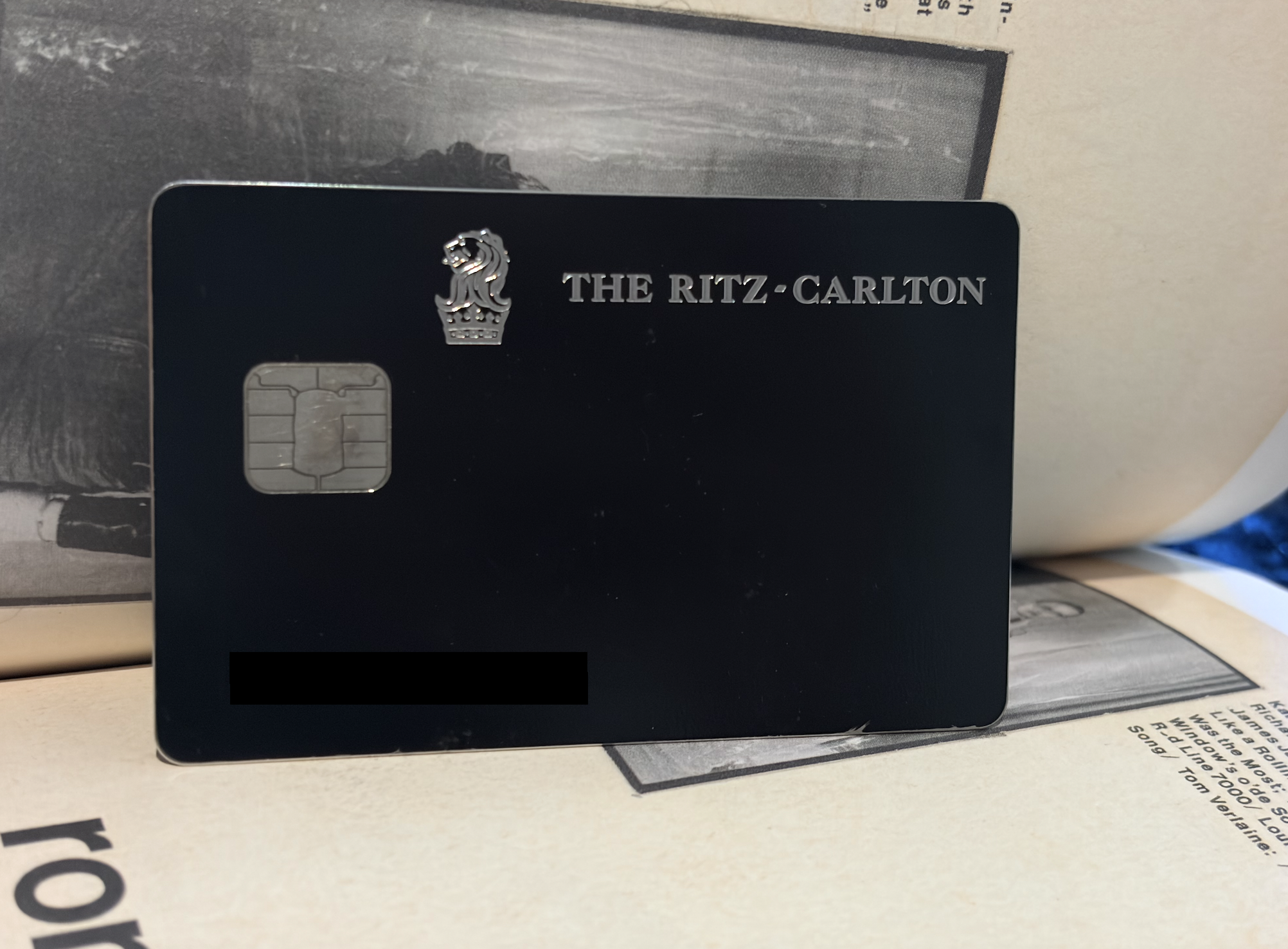
For me, the point of the Bonvoy Brilliant or Ritz-Carlton isn’t having an expensive black metal credit card. It’s using the card to make travel better and, ideally, less expensive.
A great upgrade, a complimentary breakfast overlooking the water, or a memorable night at a hotel I’d otherwise struggle to justify paying cash for — those are the things that make these cards worth having.
The cards are just tools. The experiences are what matter.


Leave a Reply