
This is an honest, unsponsored review. Like other posts on Take Risks Be Happy, it may contain affiliate links that do not affect our editorial judgment. As an Amazon Associate I earn from qualifying purchases.
This is not just a review of the Portman Ritz-Carlton hotel. It’s an explanation of the area it is in, why the hotel is significant, and why this area is not out of the way, but actually exactly where you want to be located if you visit Shanghai. If you are a tourist and it’s your first time, you might look at a map and think this location is out of the way. It’s not. Below, among other things, is an explanation why. All photos were either taken on my iPhone, or my Fujifilm XS-20 digital camera.
If you don’t want to read the full review, know these three things:
- The Portman Ritz-Carlton is a very nice hotel in a slightly aging building, with great service and a fantastic location.
- When you’re in Shanghai, visit the French Concession and explore the European/Chinese architecture and buildings.
- Visit the nearby Jing An temple, surrounded by skyscrapers to see a juxtaposition of China’s past and future.
About the Portman Ritz-Carlton
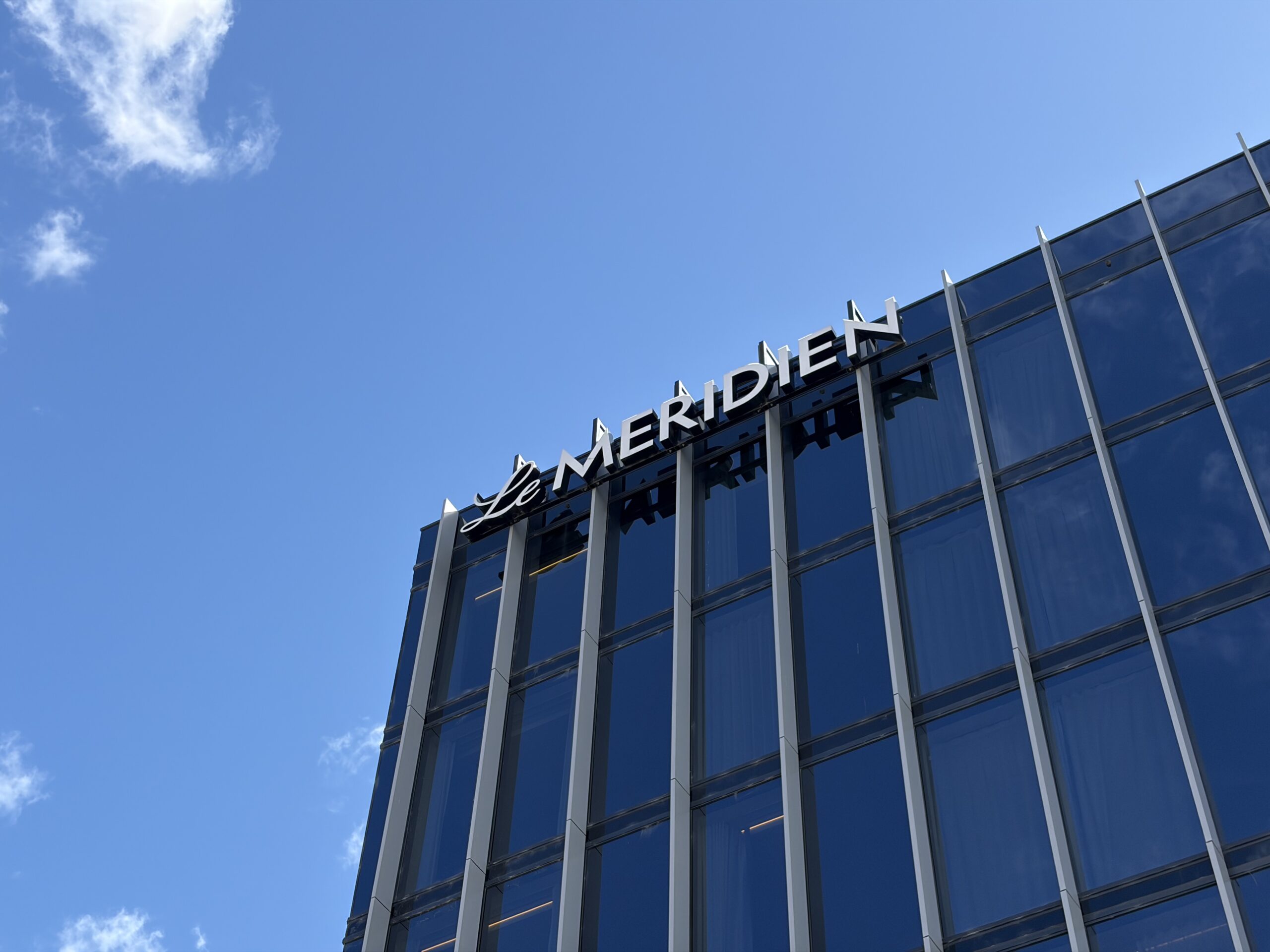
The Portman Ritz-Carlton is named after American architect and developer John C. Portman Jr., who designed the Shanghai Centre complex that houses the hotel.
The story of the hotel is actually quite fascinating. During Deng Xiaoping’s historic 1979 visit to the United States, he visited the Peachtree Center complex in Atlanta, Georgia, which Portman had developed. Deng was impressed by the combination of hotels, offices, residences, and retail space, and expressed interest in bringing something similar to China.

The resulting Shanghai Centre opened in 1990, with the hotel originally known as the Portman Hotel. The 165-meter-tall hotel tower was actually Shanghai’s tallest building when it opened. In 1997, it became China’s first Ritz-Carlton hotel. Today, the Portman Ritz-Carlton has 593 rooms and suites, making it one of the larger Ritz-Carlton properties.
This history is particularly interesting given Shanghai’s role as China’s gateway to the outside world, something I’ll discuss later in this review.
The Portman Ritz-Carlton is one of two Ritz-Carltons in Shanghai. The Ritz-Carlton Pudong is newer and generally more expensive. It’s probably better in terms of raw luxury experience, although I haven’t been. The Pudong property occupies the upper floors of the Shanghai IFC complex, and offers spectacular views of the Bund and Shanghai’s famous skyline.
However, the Portman Ritz-Carlton has something that, in my opinion, may be more valuable: its location.
The Location: Jing’an and the French Concession
First, the Portman Ritz-Carlton is in Jing’an, which tells you something. If you are a foreigner just looking at a map of Shanghai, you might think this is an out-of-the-way spot. It’s not. It’s the center of one of the most interesting parts of Shanghai, with convenient access to both Jing’an and the French Concession.

The hotel is located at 1376 West Nanjing Road, one of Shanghai’s major shopping and commercial streets, inside the Shanghai Centre complex. The complex itself contains offices, shops, restaurants, residences, and a theater, so the Ritz-Carlton is part of a much larger development rather than an isolated hotel.

The Bund has its place, and Pudong is fine—it’s new skyscrapers—but the French Concession and Jing An areas are, in my mind, the best parts of Shanghai.
In this broader area, between the French Concession and Xintiandi, you have the founding of China’s Communist Party, historic European mansions, and the beautiful, historic, and significant Jing’an Temple.

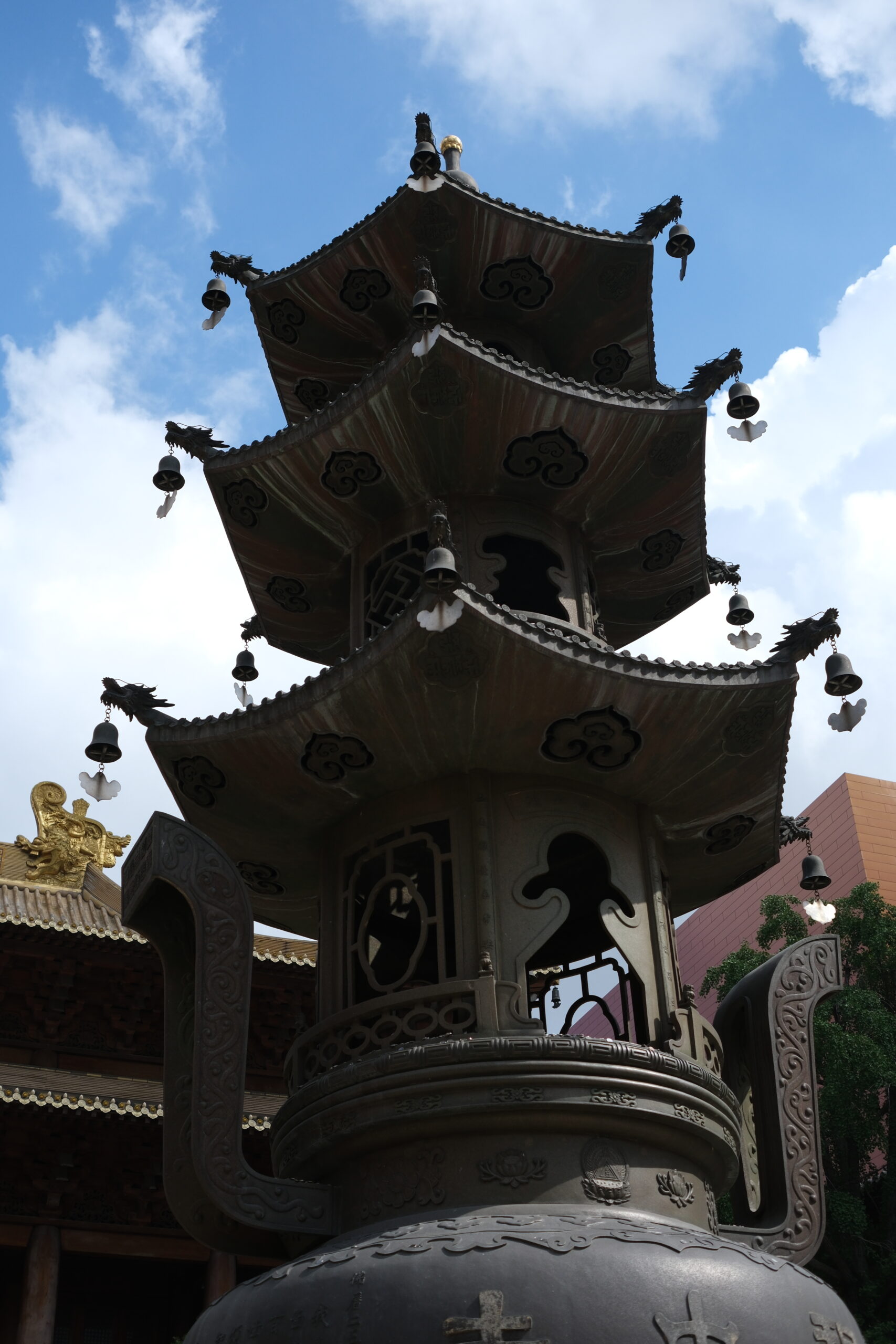
ing’an Temple is particularly fascinating. It traces its origins to 247 AD, during China’s Three Kingdoms period, and was moved to its current location in 1216. Although the buildings have been reconstructed over the centuries, the temple’s history stretches back more than 1,700 years. Today, you have this impressive Buddhist temple surrounded by luxury shopping malls, modern office buildings, and skyscrapers.

It’s an interesting juxtaposition, and one that tells you quite a bit about Shanghai.
The Portman Ritz-Carlton’s location is also excellent for shopping and dining. West Nanjing Road is one of the city’s major commercial streets, and you have a number of restaurants, cafes, and shops within the Shanghai Centre complex itself.

I stayed here for nearly two weeks due to a minor medical emergency that meant I could not fly. Great staff, a great location, excellent service. One of the things I appreciated most about the Portman Ritz-Carlton was how the hotel managed to combine traditional luxury service with a genuinely useful location.
And because I ended up spending so much longer here than anticipated, I got to know the hotel considerably better than I would have during a normal two- or three-night visit.

Why You Should Visit the French Concession
The French Concession, as well as areas nearby, shows you two important things about Chinese history.
First, you have colonial mansions and buildings, which remind us not only of the century of humiliation faced by China as foreign powers imposed unequal treaties on China, but also the individual stories of trade and cultural exchange.

The French Concession was established in 1849 and remained under French administration until 1943. Today, much of the area retains its distinctive architecture, including historic mansions, Art Deco buildings, traditional Shanghai lane houses, and beautiful streets lined with plane trees.
It’s not just European architecture, either. You also have the shikumen houses, a distinctive Shanghai architectural style that combines elements of traditional Chinese residences with Western influences.

Second, this area played an extraordinarily important role in the development of modern China.
The Chinese Communist Party held its First National Congress in July 1921 in a shikumen building in what was then the French Concession. The building, now at 76 Xingye Road near Xintiandi, is preserved as a historical site and museum.

Mao Zedong was among the delegates who attended that meeting. A century later, the party founded in that building governs the world’s second-largest economy.
So, within a relatively small area of Shanghai, you have physical reminders of the country’s colonial history, the beginnings of the Communist Party, and China’s subsequent transformation.

Of course, China is one of the world’s richest cultures, with one of the most fascinating histories. There is no one part of Shanghai that is best. But, and this is just my personal opinion, what is unique about Shanghai is how it is Mainland China’s gateway to the world. Thus, areas like the French Concession are a unique and fascinating window into a small but interesting portion of Shanghai’s history.
Because of political reasons, some Westerners do not want to visit China, but it really is worth going, and you’ll learn a lot.

I listened to Chris Arnade’s podcast with Tyler Cowen, and was surprised that both Chris and Tyler preferred Beijing to Shanghai. Well, I recently met Chris—who is rightfully famous for his writing on walking across various cities—and found he had never been to, or apparently even heard of, the French Concession in Shanghai. This is understandable given his entire thing is landing in a city and seeing where fate takes him, but for you, the reader reading this, I implore you not to make that mistake, and be sure you go visit the French Concession.
It is a fantastic part of Shanghai, and really is unique and special.
If you go to the other Ritz-Carlton in Shanghai, and just check out the Bund and Pudong, you are doing yourself a disservice. Those are absolutely worth visiting, but Shanghai has so much more to offer than its modern skyline.
The Service and Nearby Medical Center
As you’d expect at the Ritz-Carlton, the service was great. Upon check-in around midnight, I was upgraded to a suite as a Platinum Elite member. More importantly, the staff were genuinely helpful and concerned when I told them about my ear issue, and called a local hospital. Unfortunately, I was told I couldn’t be seen until 4 am and the doctor would not speak English.
So, first thing next morning, they scheduled an appointment at a clinic with doctors who spoke English. Coincidentally, this clinic was in the Ritz-Carlton complex, so I could literally walk out of the lobby, turn right, walk 20 steps to a Starbucks, walk ten more steps, then get into an elevator that took me to a doctor. That was incredible.
Hopefully this never happens, but if you are traveling while dealing with a chronic health condition or some sort of issue where you may need medical care, the Portman Ritz-Carlton is ideal.

You are literally RIGHT NEXT to a luxury international medical clinic, SinoUnited Health.
SinoUnited Health is a private healthcare provider with multiple locations in Shanghai and surrounding cities. Its Shanghai Centre Clinic is located in the West Office Tower of the same complex as the Ritz-Carlton, with offices on the third and sixth floors.
The clinic provides a range of medical specialties, including general medicine, ENT, dermatology, and other services, with an emphasis on international patients.
Importantly, this is an independent medical provider rather than a facility operated by the hotel. I know this is a weird/unusual flex on the part of the Ritz, but it is actually awesome. I showed my doctor’s bill to a local, who said it was extremely expensive. But it was basically the same price you’d pay in the United States. And in my case, since I had travel insurance, almost everything was totally reimbursed eventually anyway.
Obviously, I hope you never need to see a doctor while visiting Shanghai, but being able to get medical assistance literally steps away from my hotel room made an unpleasant situation much easier to deal with.

The Rooms and Other Luxury Amenities
The bed was comfortable, and the rooms are dated but nice. It felt like a hotel that was hyper luxury in the 90s, and now is just slightly dated, but still very nice. In some ways, the age adds to the feel of the hotel. You can tell this place has been around for a while, mostly in a good way.

And there is a good reason for that. The hotel dates back to 1990, when Shanghai was a very different city. In fact, the entire Shanghai Centre development was designed to accommodate the growing international business community during China’s economic opening.

The architecture of the Shanghai Centre incorporates elements of traditional Chinese design alongside Art Deco influences, reflecting both China’s architectural heritage and Shanghai’s historic international character. The hotel today has 593 guest rooms and suites, with contemporary Chinese decorative touches and views over the city.

One thing about the Ritz-Carlton is that beyond the hotel itself being luxury, the amenities are too. We got Diptyque soaps daily. Similar, but not exactly the same, as the one I just liked to. I actually stocked these up almost daily, so I left with perhaps 10 bars of soap, which were good micro gifts.

Once I upgraded to the Club Lounge Level, I also received two pieces of free clothes washing or pressing per day, which I took advantage of given my stay of nearly two weeks. (I did totally have to do laundry.)
This is an official benefit of the Portman Ritz-Carlton’s Club Level, and one of those amenities that is easy to overlook when comparing hotels. For a short stay, two pieces of laundry might not matter very much. For a two-week stay, it adds up.

Gifts
The Ritz-Carlton has a selection of curated gifts, including custom coffee mugs you can have made with your initials. They were only like $15–$20 USD for a custom metal cup, so I got several for friends. They’ve held up very well over the year.

This is one of those small things I actually appreciate about luxury hotels. You can sometimes find interesting, hotel-specific gifts that are reasonably priced, rather than just the usual assortment of expensive branded merchandise. They also had a Ritz-Carlton lion backpack, which I bought for my nephew. Cute!

The Breakfast
Breakfasts at the Ritz-Carlton are not included in your room rate in most cases, and are not a benefit you can choose from being Platinum Elite, unlike at hotels like the Sheraton Stockholm, Sheraton Grand Sydney Hyde Park, which has a fantastic lounge with a view of Hyde Park and the bay/ocean. Or the Sheraton Grande Tokyo Baywhich also has great views and just as much or more food than Sydney.
This is an important distinction for Marriott Bonvoy members. While Platinum Elite and higher members can often receive complimentary breakfast or executive lounge access at Marriott and Sheraton hotels, Ritz-Carlton properties generally exclude these benefits.

On the first or second day, I paid for a breakfast buffet, and it was genuinely good.
But there were frequently lines for it in the morning, and it wasn’t so remarkable that I wanted to keep paying for it—especially once I upgraded to the Club Lounge, where I could have a similar breakfast with an elevated view of the city, in a super quiet environment.
The hotel’s main restaurant is Portman’s, which serves international dishes throughout the day. There is also the Ritz Bar & Lounge, whose design draws on the Art Deco style associated with Shanghai in the 1920s and 1930s.

The Club Lounge
Once I realized I was going to be stuck here for a week or more due to my medical issue, I upgraded to the Club Lounge Level, because it offered free breakfast, lunch, and dinner.
There were ample alcoholic drinks at the dinner service, which sadly, I couldn’t enjoy due to my medical condition. But all the standard entry-level high-quality liquors were there, as well as some wine.
The Club Lounge is an important part of the Ritz-Carlton experience, but unlike many other Marriott properties, it is not automatically complimentary for Platinum, Titanium, or even Ambassador Elite members.
You have to book a room with Club access or pay to upgrade. At the Portman Ritz-Carlton, the Club Lounge officially offers five food and beverage presentations throughout the day: breakfast, lunch, afternoon snacks, evening hors d’oeuvres, and desserts with cordials.

There is also a dedicated concierge service, which is part of the Ritz-Carlton’s concept of the Club Level being something like a hotel within a hotel. You also get one free ride per day, of I think five kilometers, in a luxury sedan–some sort of Mercedes, I think an E-Class.
The combination of breakfast, lunch, and evening food made the lounge particularly useful during my extended stay.

One of the nice things about the lounge was its quiet environment and elevated view of Shanghai. The regular breakfast buffet was good, but if you can have a similar breakfast in a peaceful lounge, overlooking the city, that is certainly preferable.
For someone staying just a night or two, the upgrade may or may not be worth the additional money. But for an extended stay, especially when you can take advantage of several food services and the daily laundry benefit, the economics become considerably more attractive.
The Gym and Pool
I was not allowed to swim, due to my ear issue, so I did not use the pool. I visited it briefly, just to see it, and it was a fine, although not ultra-luxury pool. The Portman Ritz-Carlton actually has both indoor and outdoor swimming pools, as well as a whirlpool. It’s sad because, if I could’ve gone swimming, I would’ve loved to have used my Shokz Openswim Pro swimming headphones, which actually make swimming a lot easier and more fun.
The hotel’s health club is quite substantial, with cardio equipment, free weights, resistance-training machines, steam rooms, saunas, and a squash court. In other words, this is a fairly comprehensive hotel fitness facility rather than just a small room with a treadmill and a few dumbbells.

Extra Ritz-Carlton Things
One of the things that makes the Portman Ritz-Carlton unusual is that it is part of the Shanghai Centre, rather than simply being a standalone hotel.
The development includes residences, offices, retail space, restaurants, and a theater. It was one of Shanghai’s pioneering modern mixed-use developments, conceived during the period when China was beginning to open its economy to foreign business and investment. Interestingly, the Portman Ritz-Carlton was China’s first Ritz-Carlton, and its history is closely connected with Shanghai’s development into the international business center it is today.

The hotel has also hosted numerous international delegations and visiting heads of state over the years. So while the rooms may seem somewhat dated compared with the newest luxury hotels in Shanghai, there is quite a bit of history here. And, for me, that history is part of the hotel’s appeal.
Portman Ritz-Carlton vs. Ritz-Carlton Pudong: Which Should You Choose?
The main argument for the Portman Ritz-Carlton over the Ritz-Carlton in Pudong is that Jing’an is actually a better and cooler part of Shanghai.
The Ritz-Carlton Pudong is certainly the more modern of the two properties. It occupies the upper floors of the Shanghai IFC complex in Lujiazui, Shanghai’s financial district, and offers some extraordinary views of the city.

The Portman Ritz-Carlton, on the other hand, is a historic luxury hotel in one of Shanghai’s most interesting central neighborhoods, with easy access to the French Concession and other culturally significant parts of the city. I haven’t been to the Ritz-Carlton Pudong, so I cannot compare the service or rooms directly. But I would not assume that the newer and more expensive property is necessarily the better choice.

If you’re visiting Shanghai for the first time, you’ll almost certainly want to see the Bund, Pudong, and the city’s spectacular modern skyline.
But there’s much more to Shanghai than that. The French Concession, Jing’an, and the surrounding historical neighborhoods offer a window into a different side of the city, and one that I personally find considerably more interesting. As for the hotel itself, the Portman Ritz-Carlton offers great service, comfortable accommodations, an excellent Club Lounge, and a fantastic location.
It may not be the newest or most spectacular Ritz-Carlton, but it’s a genuinely enjoyable luxury hotel with an interesting history.And, as I unexpectedly discovered, having an international medical clinic literally next door can be an incredibly useful bonus.
This is an honest, unsponsored review. Like other posts on Take Risks Be Happy, it may contain affiliate links that do not affect our editorial judgment. As an Amazon Associate I earn from qualifying purchases.
FAQ
Is the Portman Ritz-Carlton the same as the Ritz-Carlton in Pudong?
No, these are different hotels. The Portman Ritz-Carlton is an older hotel, with a cheaper daily rate, and–to me, a much better location. While the newer Ritz-Carlton looks better on paper, I would rather stay in the Jing An / French Concession area than the Bund/Pudong area. As an analogy, the Portman Ritz-Carton is sort of like Staying in SoHo, while the Ritz-Carlton Pudong is sort of like staying in Times Square. On your first New York Trip you think Times Square is awesome, but then you realize other parts of the city are better. Still, the newer Ritz-Carlton Pudong does offer an unmatched sense of luxury at the top of a brand new skyscraper.
What Travel Essentials do you Recommend?
First, protect your skin with a nice sunscreen: This is non-negotiable if you’re going to be in the sun. You want something that feels nice, isn’t sticky or pasty, and actually works. I’ve tried a ton and prefer to use Elta MD or La Roche Posay
Second, capture the memories that matter with a high quality camera. You can use your iPhone, but the Insta360 Luna Ultra (full review here) is our recommendation for a great travel camera. The Luna Pro, or DJI Osmo Pocket series of cameras is a great alternative.
Third, choose luggage that is light but well made. I recommend, and personally use, the Samsonite Proxis for a checked luggage, paired with the Cotopaxi Allpa 28L backpack as a carry on.
Is the Club Level Worth it?
The club level is worth it if you’ll reliably use the club to get work done, and take advantage of the breakfast and evening drinks. Otherwise, I’d skip it, as Shanghai has a plethora of fantastic restaurants. Remember, if you have the Chase Ritz-Carlton card (which we reviewed here) you get three free seven day club lounge upgrade certificates.
Leave a Reply